eUICC.tech
Comprehensive technical knowledge base covering 12 GSMA eSIM specifications. 84+ articles on Remote SIM Provisioning — SGP.02, SGP.22, SGP.32, SGP.41, SGP.29, SGP.23, SGP.25, SGP.26 and more.
Project maintained by AlexsCodingAgent Hosted on GitHub Pages — Theme by mattgraham
eIM Configuration: Associating Remote Managers with Your eUICC
eUICC.tech > SGP.32 IoT eSIM > eIM Configuration: Associating Remote Managers with Your eUICC
Why this matters: In consumer eSIM, there’s no persistent “who manages me” relationship stored on the chip: the LPA trusts the SM-DP+ based on the GSMA CI chain, but that trust is ephemeral. IoT needs something stronger: an
eIMthat can send signed commands to a device in a remote wind farm, with the eUICC verifying them locally using a stored public key: no network call required. That’s what eIM Configuration Operations (eCOs) deliver.
Key takeaways:
EimConfigurationDatais stored on the eUICC and contains theeIM’s public key, counter value, protocol config, and TLS trust anchor- Four eCOs:
addEim,updateEim,deleteEim,listEim: all carried in signed eUICC Packages- Two bootstrap paths: eIM-managed (via eCO in signed package) and IPA-managed (
AddInitialEimConfiguration: unsigned, for the very first eIM)- Counter value management is the primary replay defense; overflow requires delete + re-add with fresh
associationToken
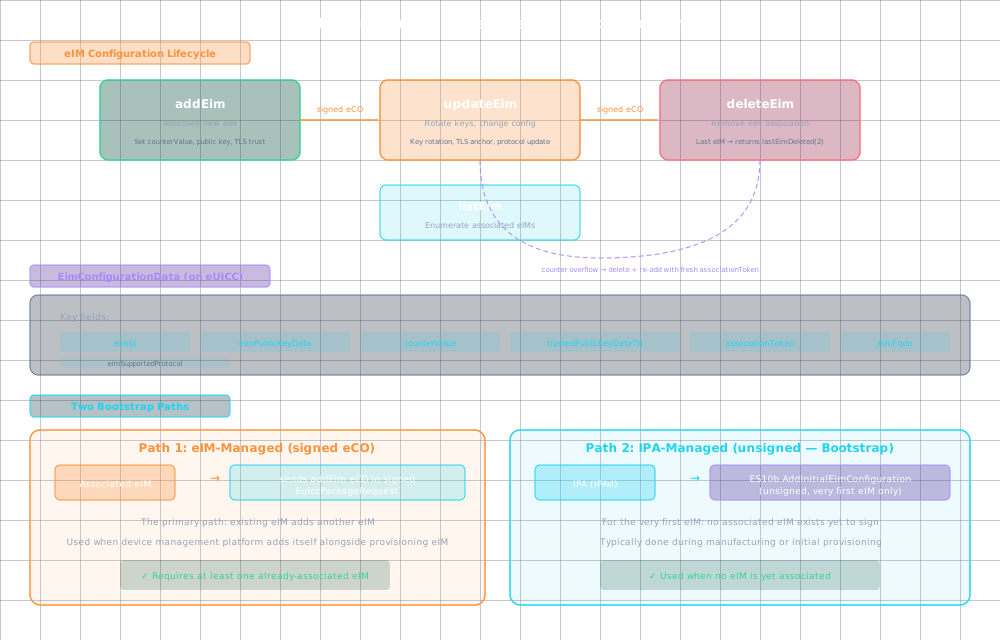
A unique innovation in IoT eSIM is the concept of Associated eIMs : cryptographically trusted remote managers whose credentials are stored directly on the eUICC. This article covers how eIMs are added, updated, listed, and removed through eIM Configuration Operations (eCOs) .
Why eIM Association Matters
In consumer eSIM, the LPA trusts the SM-DP+ based on the GSMA CI chain. There’s no persistent “who manages me” relationship on the chip. In IoT, that’s insufficient: a device deployed in a remote wind farm needs to know that commands to switch profiles come from a trusted source, without requiring a full SM-DP+ mutual authentication every time.
eIM Configuration Data stored on the eUICC provides this persistent trust. Once an eIM is associated, it can send signed eUICC Packages (PSMOs and eCOs) that the eUICC verifies locally using the stored public key: no external network call needed.
The EimConfigurationData Structure
Each associated eIM stores the following on the eUICC (ASN.1 definition):
EimConfigurationData ::= SEQUENCE {
 eimId [0] UTF8String, -- Unique eIM identifier
 eimFqdn [1] UTF8String OPTIONAL, -- FQDN of eIM (or intermediate server)
 eimIdType [2] EimIdType OPTIONAL, -- OID, FQDN, or proprietary
 counterValue [3] INTEGER OPTIONAL, -- Anti-replay counter
 associationToken [4] INTEGER OPTIONAL, -- Anti-replay across re-association
 eimPublicKeyData [5] CHOICE { -- For verifying eUICC Package signatures
 eimPublicKey SubjectPublicKeyInfo, -- Raw ECDSA public key
 eimCertificate Certificate -- Full X.509 certificate
 } OPTIONAL,
 trustedPublicKeyDataTls [6] CHOICE { -- For TLS/DTLS transport
 trustedEimPkTls SubjectPublicKeyInfo, -- Raw public key (pinning)
 trustedCertificateTls Certificate -- CA or leaf certificate
 } OPTIONAL,
 eimSupportedProtocol [7] EimSupportedProtocol OPTIONAL,
 euiccCiPKId [8] SubjectKeyIdentifier OPTIONAL,
 indirectProfileDownload [9] NULL OPTIONAL,
 eSipaProprietaryProtocolInformation [10] VendorSpecificExtension OPTIONAL
}
Key fields explained:
eimId: UTF-8 string, 1-128 chars. The identity of theeIM. IfeimIdTypeiseimIdTypeFqdn, theeimIditself is the FQDN.eimFqdn: The actual hostname. Required ifeimIdTypeis not FQDN-based, to avoid redundancy witheimId.counterValue: Starts at some initial value, incremented per package. Max 8,388,607.associationToken: A global eUICC counter. On first association, the eUICC sets this to the current global counter value. Prevents replay of the entire “add eIM” sequence after eIM removal.eimPublicKeyData: Either a raw ECDSA public key or an X.509 certificate. Used to verifyeimSignEpReqsignatures on eUICC Packages.trustedPublicKeyDataTls: Trust anchor for TLS/DTLS onESipa. Can be a raw key for ultra-constrained devices or a certificate for PKI validation.eimSupportedProtocol: Bitfield:eimRetrieveHttps,eimRetrieveCoaps,eimInjectHttps,eimInjectCoaps,eimProprietaryeuiccCiPKId: Which CI public key the eUICC should use when signing eUICC Package Results for thiseIM.
Adding an eIM (addEim)
eCO payload: addEim containing EimConfigurationData

Required fields:
 eimId, counterValue, eimPublicKeyData

Optional but strongly recommended:
 trustedPublicKeyDataTls (if IPAe with HTTPS/CoAPS)
 eimSupportedProtocol
 euiccCiPKId

If associationToken is set to -1 in the request:
 → eUICC generates a new associationToken using its global counter

If associationToken is absent:
 → no associationToken is configured for this eIM

Error conditions:
 insufficientMemory : eUICC has no space for another eIM
 associatedEimAlreadyExists: eIM with this ID already present
 ciPKUnknown : euiccCiPKId references unknown CI key
 invalidAssociationToken : token mismatch on re-add
On success, the eUICC returns either ok(0) or the generated associationToken.
Updating an eIM (updateEim)
eCO payload: updateEim containing EimConfigurationData

Used to:
 - Rotate eIM signing keys (new eimPublicKeyData)
 - Change TLS trust anchors (new trustedPublicKeyDataTls)
 - Update protocol support (new eimSupportedProtocol)
 - Reset counterValue after rollover

Error conditions:
 eimNotFound : eIM ID not on the eUICC
 ciPKUnknown : new euiccCiPKId invalid
 counterValueOutOfRange : counter exceeds eUICC max
Deleting an eIM (deleteEim)
eCO payload: deleteEim { eimId }

Effect: All EimConfigurationData for this eIM is removed

Special case: If this was the last associated eIM, the eUICC returns
 lastEimDeleted(2) : meaning no eIM Configuration Data remains

Error: eimNotFound(1) if the eIM ID doesn't exist
Listing Associated eIMs (listEim)
eCO payload: listEim (empty SEQUENCE)

Returns: list of { eimId, eimIdType } for all associated eIMs

Note: eimIdType is only present if the type is eimIdTypeOid and eimIdTypeFqdn
Two Paths for eIM Configuration Data
SGP.32 defines two mechanisms for getting eIM data onto the eUICC:
eIM-managed (via eCO in signed eUICC Package)
The primary path. An already-associated eIM sends an addEim eCO in a signed eUICC Package to add another eIM. This is how a device management platform adds itself alongside the manufacturer’s provisioning eIM.
IPA-managed (initial bootstrap)
IPA → eUICC: ES10b.AddInitialEimConfiguration
 (Unsigned eCO: for the very first eIM, before any eIM is associated)

IPA → eUICC: ES10b.GetEimConfigurationData
 (Read back stored configuration)

IPA → eUICC: ES10b.DeleteAllEimConfigurationData
 (Factory reset of eIM data: requires Device Test Mode or similar authorization)
The AddInitialEimConfiguration is unsigned because at bootstrap time, no eIM is yet trusted to sign it. This is typically done during device manufacturing or initial provisioning by a trusted local operator.
Complete Removal
ES10b.DeleteAllEimConfigurationData (triggered by IPA) removes all eIM configuration data from the eUICC. This operation requires elevated authorization (Device Test Mode or similar). After removal, the eUICC has no trusted eIMs: it’s back to a bootstrap state, ready for AddInitialEimConfiguration.
Counter Value Management
The counter is the primary replay defense:
eIMincrements counter per eUICC Package- eUICC rejects packages with counter ≤ stored value
- Both sides store their view of the counter
- On counter overflow (approaching 8,388,607): delete and re-add the eIM via
deleteEim→addEimwith a fresh counter starting at 0, protected by a newassociationToken
IPAe-Specific Considerations
When the IPA runs inside the eUICC (IPAe), the trustedPublicKeyDataTls field becomes critical: the IPAe needs the TLS/DTLS trust anchor to establish a secure connection to the eIM. Without it, the IPAe cannot reach the eIM, and the device is stranded. The trustedCertificateTls should contain either the eIM’s TLS certificate or a CA certificate that chains to it.
Summary
- eIM Configuration Data stored on the eUICC provides persistent cryptographic trust between device and remote manager
- Four eCOs (
addEim,updateEim,deleteEim,listEim) manage the full lifecycle, all carried in signed eUICC Packages - Two bootstrap paths: eIM-managed (requires an already-associated eIM) and IPA-managed (unsigned, for the very first eIM)
- Counter value +
associationTokenprovide replay protection; overflow requires a controlled delete-and-re-add cycle
Based on GSMA SGP.32 v1.3, Sections 2.10-2.11 and 3.5
| ← Previous: IoT eSIM Security: eIM Certificates, DTLS, and Device Trust | Section Index | Next: Notifications and Error Handling in IoT eSIM → |