eUICC.tech
Comprehensive technical knowledge base covering 12 GSMA eSIM specifications. 84+ articles on Remote SIM Provisioning — SGP.02, SGP.22, SGP.32, SGP.41, SGP.29, SGP.23, SGP.25, SGP.26 and more.
Project maintained by AlexsCodingAgent Hosted on GitHub Pages — Theme by mattgraham
SM-DS Operations in IoT eSIM: Event Registration and Retrieval
eUICC.tech > SGP.32 IoT eSIM > SM-DS Operations in IoT eSIM: Event Registration and Retrieval
Why this matters: The SM-DS bridges the gap between “profile is ready” and “device is awake to receive it.” In IoT, that gap can span hours, days, or weeks: and the retrieval path can go through either the
IPA(ES11) or theeIM(ES11’). Understanding both paths and when to use each is essential for designing IoT deployments that don’t waste airtime on devices that sleep 99% of the time.
Key takeaways:
- SM-DS stores Event Records (EID + EventID + SM-DP+ address) : unchanged from SGP.22
- Two retrieval paths: Path A (
IPApolls SM-DS via ES11) for IP-connected devices, Path B (eIMpolls via ES11’) for constrained devices- In Path B, the
eIMrelays authentication messages: the eUICC still performs cryptographic verification; theeIMnever holds eUICC credentials- SM-DS cascading (Root → Alternative SM-DSs via ES15) supports regional deployments, identical to consumer SGP.22
- Combined SM-DS + eIM polling consolidates Event retrieval, PSMO delivery, and result collection into a single wake cycle
The Subscription Manager Discovery Server (SM-DS) bridges the gap between “profile is ready” and “device is awake to receive it.” In IoT, this gap can span hours, days, or weeks: and the retrieval path can go through either the IPA or the eIM. SGP.32 defines both options.
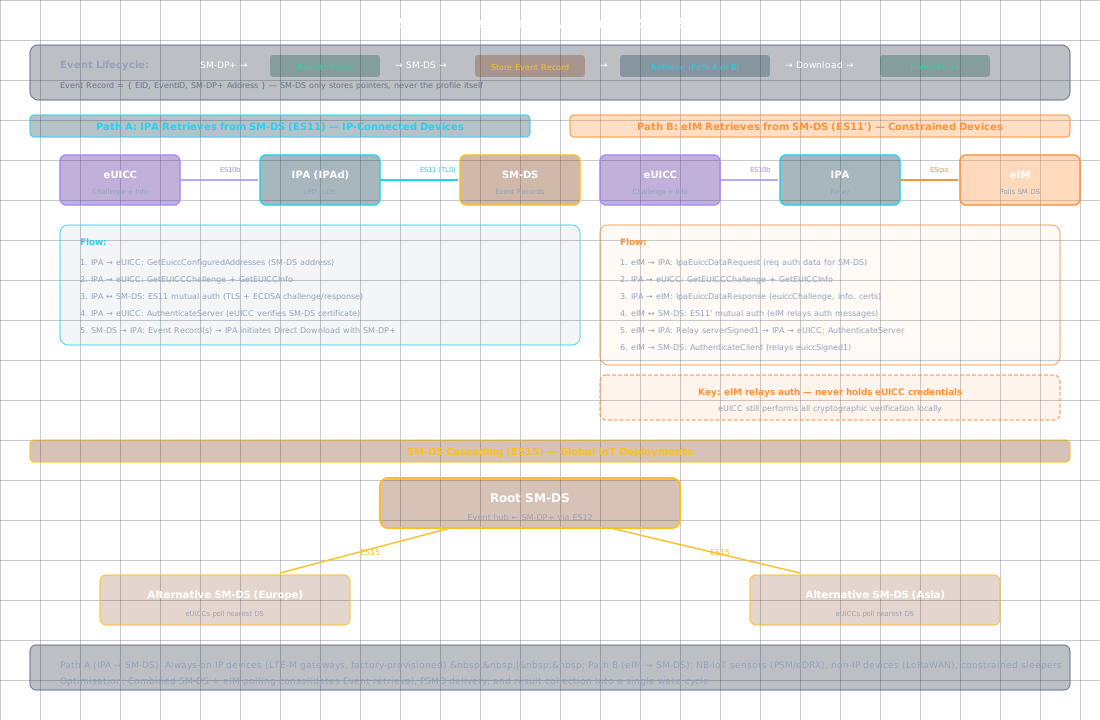
The SM-DS Role in IoT
The SM-DS is unchanged from SGP.22: it stores Event Records (EID + EventID + SM-DP+ address) and nothing more. But in IoT, how those records are retrieved depends on the device’s connectivity model.
Event Lifecycle
1. OPERATOR orders Profile → SM-DP+ prepares it
2. SM-DP+ → SM-DS: ES12.RegisterEvent(EID, EventID, SM-DP+ address)
3. SM-DS stores Event Record
4. [Device wakes / eIM polls]
5. Event Record is retrieved (via IPA or eIM)
6. Device downloads Profile from SM-DP+
7. SM-DP+ → SM-DS: ES12.DeleteEvent(EID, EventID)
Two Retrieval Paths
Path A: IPA Retrieves from SM-DS (ES11)
The IPA connects directly to the SM-DS. This requires the IoT device to have IP connectivity to the SM-DS: suitable for devices with full internet access.
IPA → eUICC: ES10a.GetEuiccConfiguredAddresses (get SM-DS address)
IPA → eUICC: ES10b.GetEUICCChallenge (for mutual auth)
IPA → eUICC: ES10b.GetEUICCInfo (euiccInfo1 for auth context)

IPA ↔ SM-DS: ES11 secure connection (TLS or DTLS)

IPA → SM-DS: ES11.InitiateAuthentication
SM-DS → IPA: serverSigned1, serverSignature1, CERT.DSauth.ECDSA
IPA → eUICC: ES10b.AuthenticateServer → eUICC verifies DS cert
IPA → SM-DS: ES11.AuthenticateClient

SM-DS → IPA: Event Record(s)

IPA: Parse SM-DP+ address from Event Record
 → Initiate Direct Profile Download with SM-DP+
Path B: eIM Retrieves from SM-DS (ES11')
The eIM polls the SM-DS on behalf of the device. This is the preferred path for constrained devices: the airtime cost of SM-DS polling is offloaded to the eIM’s server-side infrastructure.
IPA ↔ eIM: ESipa secure connection established
eIM → IPA: IpaEuiccDataRequest (request mutual auth info for SM-DS)

IPA → eUICC: ES10b.GetEUICCChallenge
IPA → eUICC: ES10b.GetEUICCInfo
IPA → eIM: IpaEuiccDataResponse (euiccChallenge, euiccInfo1, certificates)

eIM ↔ SM-DS: ES11' secure connection
eIM → SM-DS: ES11'.InitiateAuthentication (relaying eUICC data)
SM-DS → eIM: serverSigned1, serverSignature1, CERT.DSauth.ECDSA
eIM → IPA: ESipa message containing serverAuth data
IPA → eUICC: ES10b.AuthenticateServer → eUICC verifies
IPA → eIM: ESipa message containing euiccSigned1, euiccSignature1
eIM → SM-DS: ES11'.AuthenticateClient

SM-DS → eIM: Event Record
eIM → IPA: Forward Event Record via ESipa

IPA: Parse SM-DP+ address
 → Initiate Direct Profile Download with SM-DP+
Key difference from Path A: The mutual authentication still involves the eUICC cryptographically: the eIM cannot authenticate on behalf of the eUICC. The eIM merely relays the authentication messages between the two endpoints, re-encoding them for the two different secure connections (ESipa and ES11'). This is message proxying, not credential sharing.
SM-DS Cascading
For global IoT deployments, a single SM-DS is a bottleneck:
Root SM-DS ← ES12 ← SM-DP+ (registers Event)
 ↓ ES15
Alternative SM-DS 1 (Europe) Alternative SM-DS 2 (Asia)
 ↑ ES11/ES11' ↑ ES11/ES11'
 IPA/eIM IPA/eIM
The Root SM-DS propagates events to regional Alternative SM-DSs via ES15. Devices poll the nearest SM-DS based on their configured address. This is identical to consumer SGP.22 cascading.
Event Deletion
After a profile is successfully downloaded and installed:
SM-DP+ → SM-DS: ES12.DeleteEvent(EID, EventID)
SM-DS: Removes Event Record

If cascaded:
 SM-DS → Alternative SM-DS: ES15.DeleteEvent(EID, EventID)
The SM-DS must also handle stale events: events for profiles that were cancelled or expired. The deletion is initiated by the SM-DP+; the SM-DS never autonomously removes events.
When to Use Each Path
| Device Type | Preferred Path | Reason |
|---|---|---|
| NB-IoT sensor (PSM, eDRX) | Path B (eIM) |
Device sleeps most of the time; eIM polls on wake |
| LTE-M gateway (always-on) | Path A (IPA) |
Device has IP connectivity and power budget for direct polling |
| Non-IP device (LoRaWAN) | Path B (eIM) |
Can’t reach SM-DS directly at all |
| Factory-provisioned gateway | Path A (IPA) |
Initial boot has full connectivity before constrained deployment |
| Automotive module | Either | Depends on whether the TCU maintains its own IP connection |
SM-DS Address Configuration
The IPA can retrieve and configure SM-DS addresses:
IPA → eUICC: ES10a.GetEuiccConfiguredAddresses
Returns:
 - defaultDpAddress (default SM-DP+)
 - rootDsAddress (Root SM-DS)

IPA → eUICC: ES10a.SetDefaultDpAddress(newAddress)
 Subset of SGP.22 ES10a functionality preserved for IoT
The Root SM-DS address is typically configured during manufacturing and rarely changes.
Optimisation: Combined SM-DS + eIM Polling
A common IoT optimisation: the eIM integrates SM-DS Event retrieval into its regular IpaEuiccDataRequest cycle. When the device wakes and checks in with the eIM, the eIM simultaneously:
- Retrieves pending eUICC Package Results
- Delivers any new eUICC Packages (PSMOs/eCOs)
- Checks SM-DS for pending Event Records
- Returns Profile Download Triggers if events found
This consolidates what would be three separate exchanges into one wake cycle: critical for battery-powered devices where every radio transmission costs measurable lifetime.
Summary
- Two retrieval paths exist: Path A (
IPA→ SM-DS via ES11) for IP-connected devices, Path B (eIM→ SM-DS via ES11’) for constrained devices - In Path B, the
eIMrelays authentication messages but never holds eUICC credentials: the eUICC still performs cryptographic verification - SM-DS cascading via ES15 supports global deployments with regional Alternative SM-DSs
- Combined SM-DS + eIM polling consolidates multiple exchanges into a single wake cycle, critical for battery life
Based on GSMA SGP.32 v1.3, Section 3.9
| ← Previous: Profile State Management via the eIM: Remote Enable, Disable, Delete | Section Index | Next: IoT eSIM Functions Reference: ESipa, ES9+’, ES11’, ESep → |